How Often Should You Really Get Your Chimney Swept?
How Often Should You Really Get Your Chimney Swept? A Portland Homeowner’s Guide
If you burn wood in Portland, the honest answer is simple: get your chimney professionally swept and inspected at least once a year. But “once a year” is the floor, not the whole story. How often you actually need a sweep depends on what you burn, how much you burn, the wood you feed the fire, and the age and design of your chimney. Two homes on the same street can be on completely different schedules.
At Forest Fresh Home Solutions, we sweep chimneys across Portland, Beaverton, Happy Valley, and the rest of the metro every week, and the pattern is clear: the homeowners who get burned (sometimes literally) are the ones who guess instead of measure. This guide walks you through how to figure out the right frequency for your home, what the safety authorities actually recommend, the warning signs that mean “book now,” and what a professional sweep really involves.
Key Takeaways
- Have your chimney inspected at least once a year, and swept whenever creosote reaches about 1/8 inch of buildup.
- For regular wood burners in Portland’s damp, softwood-heavy climate, that usually means at least one sweep every season, sometimes two.
- What and how you burn matters most: green or softwood fires build creosote far faster than dry, seasoned hardwood.
- Gas fireplaces still need an annual inspection, mainly for venting and carbon-monoxide safety, even though they make little creosote.
- Warning signs (a campfire smell, smoke backing up, hard-to-start fires, dark buildup at the damper) mean book a sweep now, don’t wait.
- Book in late summer or early fall, before the burning season and before appointments fill up.
The Short Answer: What the Safety Authorities Recommend
Two organizations set the standard here, and both agree on the baseline.
The National Fire Protection Association (NFPA), in its Standard 211, states that chimneys, fireplaces, and vents should be inspected at least once a year for soundness, freedom from deposits, and correct clearances. Cleaning, maintenance, and repairs are done as needed based on that inspection.
The Chimney Safety Institute of America (CSIA) puts a number on the “as needed” part: your chimney should be swept when there is about 1/8 inch (roughly 3 millimeters) of creosote buildup on the walls of the flue. That much is enough to fuel a chimney fire.
So the professional rule of thumb is: inspect every year, sweep whenever buildup reaches an eighth of an inch. For a household that burns wood regularly through a Pacific Northwest winter, those two things usually line up to one thorough sweep and inspection per year, timed before the burning season. For heavier burners, it can be twice.
Why “Once a Year” Isn’t the Whole Story
The annual figure is a safe default, but four factors push your real schedule up or down. Understanding them is how you stop guessing.
What you burn
The fuel matters more than almost anything else:
- Wood-burning fireplaces and stoves produce the most creosote and demand the most attention. This is the category where annual (or more) sweeping is non-negotiable.
- Gas fireplaces and gas logs burn far cleaner and produce almost no creosote, but they are not maintenance-free. Gas appliances still need an annual inspection to check for blockages, corrosion, and, most importantly, that combustion byproducts (including carbon monoxide) are venting properly.
- Pellet stoves burn efficiently but generate fine ash and some creosote in the vent; most manufacturers call for cleaning at least once a season, sometimes more.
- Oil-fired appliances vent soot and can form a corrosive scale in the flue, so their chimneys need annual attention too.
How much you burn
A household that lights the fireplace a handful of times over the holidays is on a different schedule than one that heats primarily with a wood stove from October through March. A rough industry benchmark for wood burners: expect meaningful creosote after burning roughly a cord of wood. If you go through several cords a season, one sweep may not carry you through safely.
The wood you actually use
This is the factor most people get wrong, and it matters enormously in Oregon.
- Unseasoned or “green” wood is full of moisture. It burns cool and smoky, and that cool, incomplete combustion is a creosote factory. Wet wood can double or triple your buildup.
- Softwoods like Douglas fir, pine, and cedar (abundant and cheap here in the Northwest) contain more resins and tend to deposit creosote faster than dense hardwoods.
- Properly seasoned hardwood, dried six months to a year to under 20% moisture, burns hot and clean and keeps buildup to a minimum.
If you are burning green Douglas fir in a damp Portland winter, you are on the fast track to a dirty flue no matter how careful you are otherwise.
The age and design of your chimney
Older masonry chimneys, chimneys with a damaged or missing liner, and flues that are oversized for the appliance all run cooler and accumulate deposits faster. An undersized or offset flue can also restrict draft, which worsens the problem. Age and condition are exactly what a yearly inspection is meant to catch.
Recommended Frequency by Appliance Type
Here is how the general guidance breaks down by what you have installed:
- Open wood-burning fireplace: inspect annually; sweep at least once a year, more often if you burn heavily or use softwood.
- Wood stove or fireplace insert: inspect annually; many regular users need sweeping once or twice per season because inserts run cooler and deposit more.
- Gas fireplace or gas logs: inspect annually; cleaning as needed. The priority is venting safety and carbon-monoxide checks, not creosote.
- Pellet stove: clean the vent at least once per heating season, following the manufacturer’s interval; heavy users clean more often.
- Oil furnace flue: inspect and service annually to manage soot and corrosive scale.
When in doubt, an annual inspection tells you exactly where you stand. It is inexpensive, fast, and it removes the guesswork.
The Portland Factor: Why Pacific Northwest Chimneys Need Extra Attention
Our climate creates chimney problems that homeowners in drier states rarely face, and it is a big reason we recommend not stretching past the annual mark here.
Moisture is relentless. Portland’s long, wet winters mean chimneys are damp for months. Moisture combined with creosote produces a corrosive, acidic mix that eats mortar joints, rusts dampers and metal components, and accelerates masonry deterioration. Water intrusion is one of the most common and expensive chimney problems we see across the metro.
Softwood is the local firewood. Douglas fir and other conifers are what most people around here can get cheaply, and as noted above, they deposit creosote faster than hardwoods.
Moss, algae, and organic growth thrive on our chimney crowns and caps, holding moisture against the masonry and sometimes obstructing the flue or cap screen.
And we have a real, defined burning season. Homes across Multnomah, Washington, and Clackamas counties fire up in the fall and burn steadily into spring. That concentrated use is exactly what builds creosote, which is why we tell customers to book their sweep in late summer or early fall, before the first cold snap and before the calendar fills up.
Creosote 101: The Real Reason Sweeping Matters
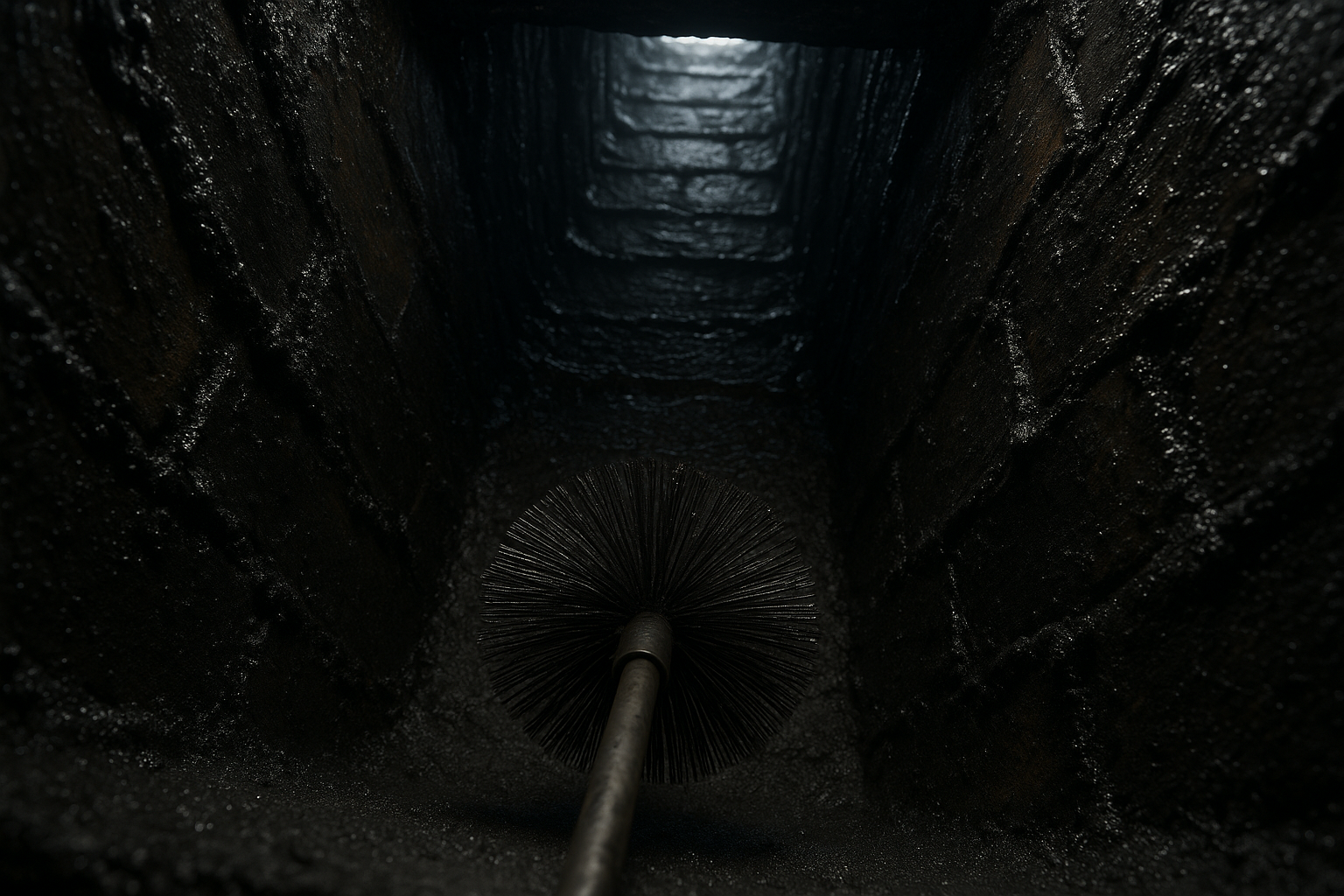
Everything above comes back to one substance: creosote. When wood burns, it releases smoke, water vapor, gases, and unburned particles. As those byproducts rise into the cooler upper chimney, they condense and stick to the flue walls as creosote, a dark, tar-like residue that is highly flammable.
Creosote forms in three stages, and it gets harder to remove at each one:
- Stage 1 is a light, flaky soot that a brush removes easily. This is where you want to stay.
- Stage 2 is harder, crunchy, tar-like flakes that take more effort and specialized tools.
- Stage 3 is glazed creosote, a shiny, hardened tar coating that is extremely difficult to remove and extremely dangerous. It is concentrated fuel, and it often requires special treatment or, in bad cases, flue relining.
That 1/8-inch threshold exists because even a thin layer of creosote, once ignited, burns hot enough (well over 2,000 degrees) to crack a flue liner, ignite the surrounding structure, and start a house fire. Regular sweeping keeps you in Stage 1 and keeps the numbers on your side.
7 Warning Signs Your Chimney Needs a Sweep Now
Do not wait for your annual appointment if you notice any of these. Book a sweep and inspection right away:
- A strong, campfire-like smell coming from the fireplace when it is not in use, especially on warm or humid days. That odor is creosote.
- Dark, oily, or flaky buildup visible around the damper, the smoke shelf, or just inside the flue.
- Smoke backing up into the room when you light a fire, which often signals a blockage or heavy buildup restricting the draft.
- Fires that are hard to start or won’t stay lit, a sign your chimney isn’t drafting the way it should.
- Reduced draft or a fireplace that “puffs” smoke back at you.
- Animals, nesting material, or debris in the chimney, or a damaged cap that let them in.
- Black soot or dark staining appearing on the fireplace surround, the walls above it, or on nearby furnishings.
Any one of these is worth a call. Several at once means don’t light another fire until a professional has looked at it.
What Actually Happens During a Professional Chimney Sweep
A proper sweep is more than running a brush up the flue. When a Forest Fresh technician comes out, here is the general process:
- Protect your home. We lay down drop cloths and use HEPA vacuums and containment so the soot stays in the fireplace and out of your living room.
- Inspect first. We evaluate the flue, liner, damper, smoke chamber, and cap, often with a camera, to see the condition and the type and amount of buildup.
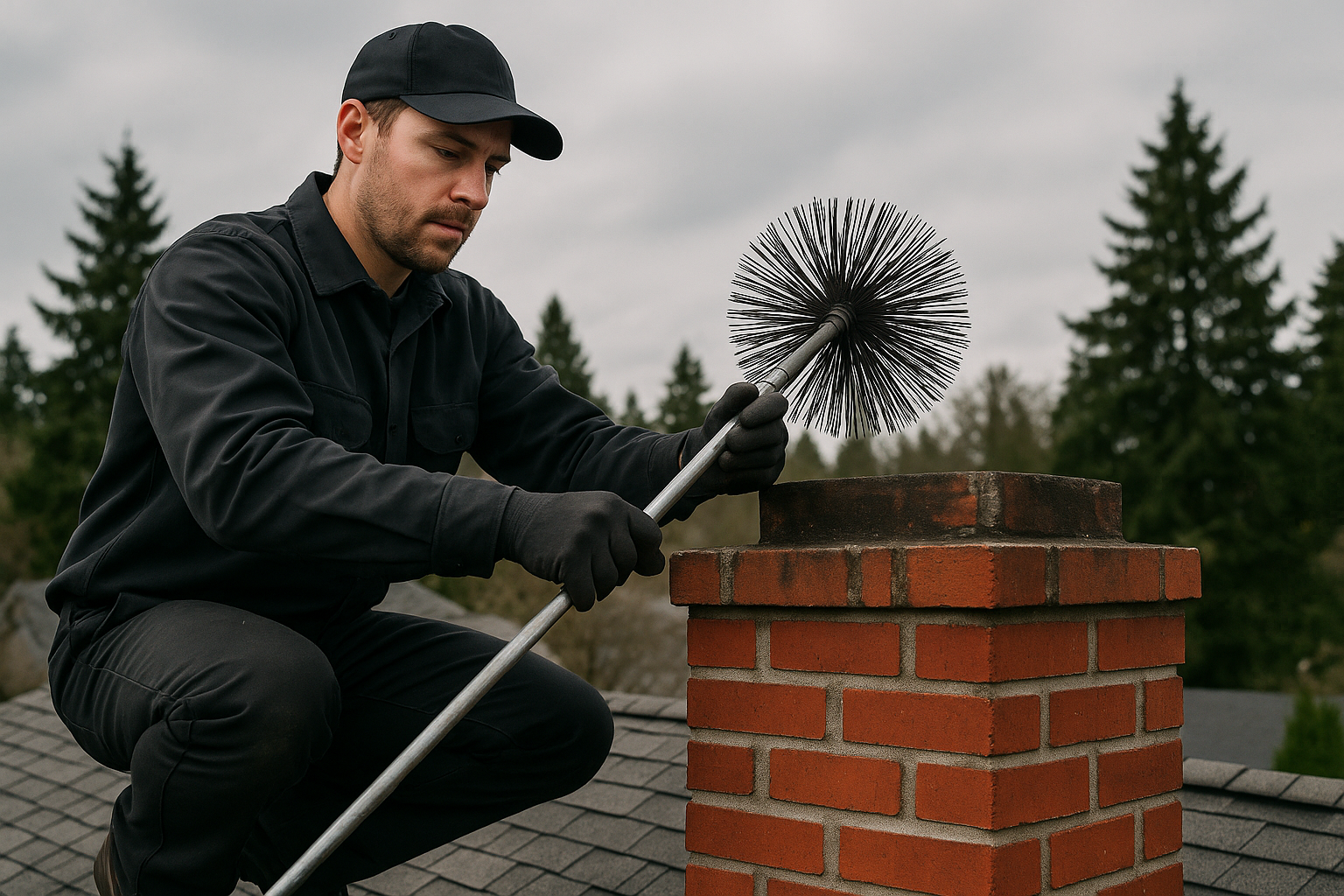
- Sweep thoroughly. Using the right brushes and rods for your flue size and material, we remove creosote and soot from the full length of the chimney, plus the smoke shelf and firebox.
- Clear obstructions. Nests, leaves, and debris come out, and we check that the cap and screen are intact.
- Report honestly. You get a straight assessment of what we found, whether anything needs repair, and when you should schedule your next visit. No scare tactics, no upselling things you don’t need.
A routine sweep and inspection typically takes about 45 minutes to an hour and a half, depending on the chimney’s condition and accessibility.
Sweeping vs. Inspection: They’re Not the Same Thing
People use the words interchangeably, but they are two different services, and you generally want both. A sweep physically removes creosote, soot, and debris. An inspection evaluates the structure and safety of the system. The NFPA recognizes three levels of inspection:
- Level 1 is the standard annual check for a chimney in regular use with no changes: the readily accessible portions of the flue, connections, and appliance.
- Level 2 is more detailed and is required when you buy or sell a home, after you change fuel types or appliances, or following an event like a chimney fire or earthquake. It usually includes a video scan of the flue.
- Level 3 is the most thorough and is done when a serious hazard is suspected; it may involve removing parts of the structure to access hidden areas.
Most homeowners need a Level 1 inspection paired with their annual sweep. If you just bought your Portland home, or you’re about to, ask for a Level 2.
What Happens If You Skip It
Deferring a sweep to save a little money is one of the more expensive gambles a homeowner can make. The risks are real:
- Chimney fires. Dirty chimneys are a leading cause of home heating fires in the United States every year. A creosote fire can be a dramatic, roaring event, or a slow, quiet burn you never notice until it has already damaged your flue and structure.
- Carbon monoxide exposure. A blocked or deteriorated flue can push carbon monoxide, an odorless, colorless, potentially fatal gas, back into your living space. This is a danger for gas and oil appliances as much as for wood.
- Expensive structural damage. Moisture and acidic creosote destroy liners, mortar, and masonry over time. A neglected chimney that needs relining or rebuilding costs far more than a decade of routine sweeps.
- Insurance and resale headaches. Many insurers expect documented chimney maintenance, and a failed inspection can derail a home sale.
DIY vs. Professional: Is Sweeping Your Own Chimney Worth It?
You can buy a brush kit and sweep your own chimney, and some experienced, careful homeowners do a reasonable job of the basic cleaning. But there are good reasons most people leave it to a pro:
- A DIY brush removes surface soot but rarely handles Stage 2 or 3 creosote, and it doesn’t tell you whether your liner is cracked or your masonry is failing.
- Roof work in Portland’s wet, mossy conditions is genuinely dangerous.
- Without a camera and trained eyes, it’s easy to miss the exact problems (hidden buildup, blockages, structural damage) that cause fires.
- The mess indoors, done wrong, is considerable.
The value of a professional isn’t just the brushing. It’s the inspection, the honest condition report, and catching a small problem before it becomes a five-figure repair.
How Much Does Chimney Sweeping Cost in Portland?
For a standard sweep and Level 1 inspection in the Portland metro, most homeowners pay a modest service fee that is a small fraction of what a chimney fire or a relining job would cost. The exact price depends on the type of chimney, its condition, how much buildup is present, and accessibility. Heavily glazed creosote, hard-to-reach flues, or added repairs will raise the figure.
Rather than quote a one-size number, we give you a clear, upfront price for your specific chimney before any work begins. Request a quote and we’ll tell you exactly what your visit will cost.
How to Prepare for Your Chimney Appointment
A few small steps make the visit faster and cleaner:
- Don’t burn a fire for at least 24 hours beforehand so the flue is cool.
- Clear a few feet of space around the fireplace or stove and move nearby furniture and rugs.
- Remove ash and unburned logs from the firebox if you can.
- Keep pets in another room while the technician works.
- Make a note of anything you’ve noticed (odors, smoke problems, difficulty starting fires) so we can check it.
Frequently Asked Questions
How often should I get my chimney swept if I only use my fireplace occasionally?
Even light users should have an annual inspection. If the inspection shows minimal buildup, you may not need a full sweep every single year, but you should never skip the yearly safety check, particularly for gas appliances where venting and carbon monoxide are the concern.
Can I burn a fire while my chimney is dirty?
If you’ve noticed any of the warning signs above, no. Once creosote reaches about an eighth of an inch, every fire carries real chimney-fire risk. Have it swept first.
Does a gas fireplace really need servicing?
Yes. Gas produces little creosote, but the flue can still develop blockages, corrosion, and venting problems. An annual inspection confirms combustion gases, including carbon monoxide, are venting safely outside.
When is the best time of year to schedule a sweep in Portland?
Late summer or early fall, before the burning season starts. You’ll get your pick of appointment times, and your chimney will be clean and safe for the first cold night.
How long does a chimney sweep take?
A routine sweep and inspection usually takes 45 minutes to an hour and a half, depending on the condition and accessibility of your chimney.
Will sweeping make a mess in my house?
Not when it’s done right. Professional sweeps use drop cloths, containment, and HEPA vacuums so the soot never reaches your living space.
The Bottom Line for Portland Homeowners
Get an inspection every year, and sweep whenever buildup hits an eighth of an inch, which for most regular wood burners in our damp, softwood-heavy climate means at least once a season. Burn dry, seasoned wood, watch for the warning signs, and don’t stretch the interval to save a few dollars. A clean chimney is cheaper, warmer, and far safer than a neglected one.
Free chimney & home-safety estimates in Portland
Chimney, fireplace, air-duct and dryer-vent services across Portland and the surrounding metro.
Need a hand from a local pro?
Forest Fresh serves Portland & SW Washington — free estimates, licensed & insured.
Get a Free Quote